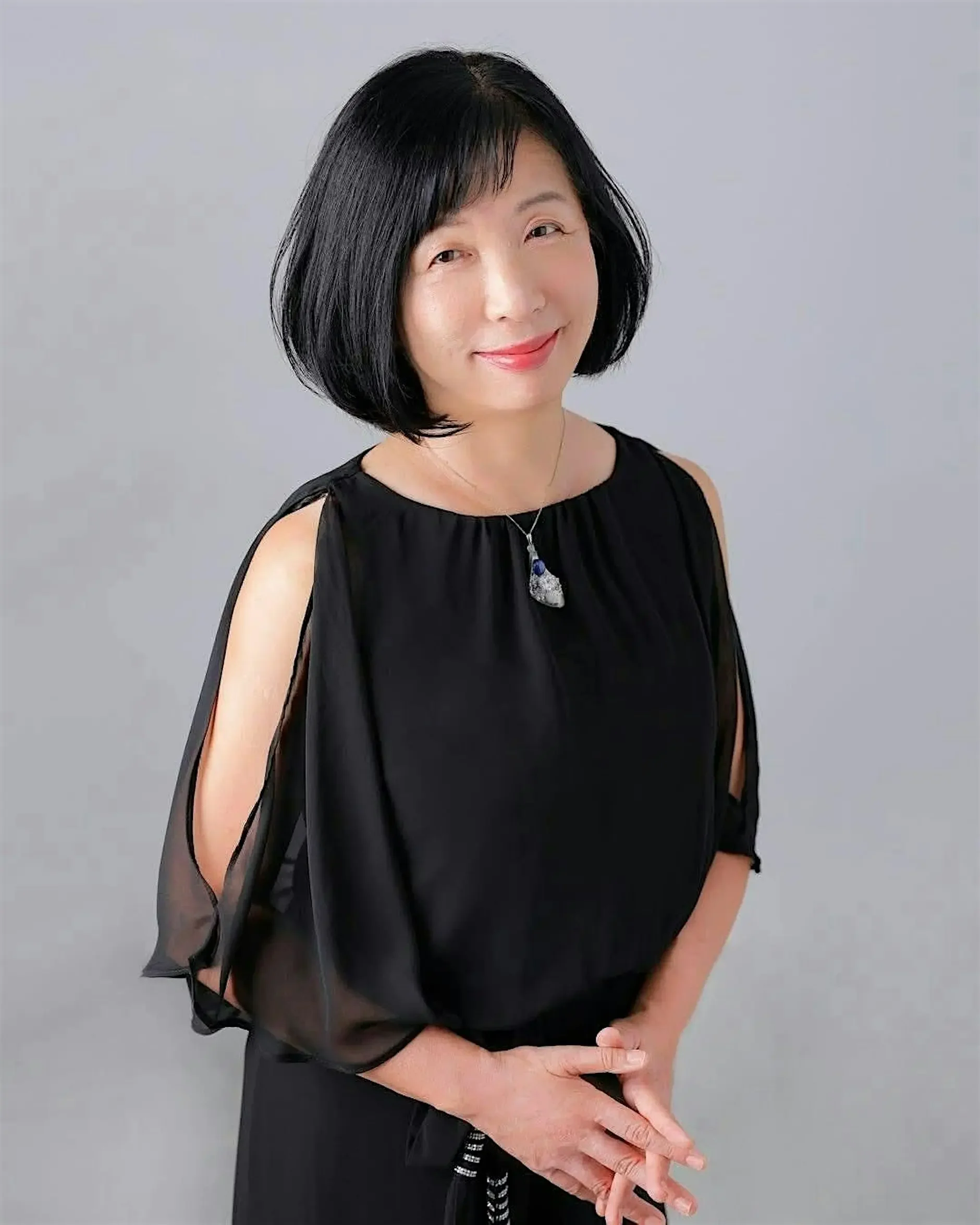
Our Director
I am Sachiko Kato, a pianist and educator based in New York City.
My life in music has been shaped by both artistic pursuit and lived experience. Over time, my focus has shifted from performance alone to something more fundamental:
how we learn, how we practice, and how clarity is formed at the piano.
This inquiry led to the creation of the Sachiko Method—a structured approach to piano study that connects thought, sound, and movement through awareness and intentional practice.
My journey
Born in Osaka and raised in Southern California, I began studying piano at an early age and quickly developed a deep connection to music.
I later studied at California State University Northridge and earned my Master’s degree from The Juilliard School in New York, where I studied on scholarship. I also continued advanced study in Boston with pianist and pedagogue Russell Sherman.
Early in my career, I received recognition in international competitions and began performing across the United States and Japan.
Along the way, my path through music was not always linear. There were periods of stepping away, of reorientation, and of returning to music with a different kind of understanding—less focused on external expectations, and more centered on meaning, resilience, and presence.
These experiences ultimately reshaped not only my relationship to performance, but to practice itself.
Performances and recordings
My recording of Bach’s Goldberg Variations (Centaur Records, 2012) marked an important artistic return and was praised for its “velvet smoothness” and expressive clarity (Fanfare Magazine).
I have since recorded works by Brahms, Debussy, and Ravel on OCCA Records, continuing my exploration of color, structure, and interpretation.
My performances have taken me to venues including Carnegie Weill Hall, Lincoln Center’s Alice Tully Hall, Steinway Hall, and the Los Angeles County Museum of Art, as well as concert stages throughout the United States and Japan.
My work has been broadcast on WQXR, WNYC, KMZT (Los Angeles), and WKCR (Columbia University).
The Sachiko Method
The Sachiko Method grew out of a simple but persistent question:
Why does practice often feel unclear, even when effort is consistent?
In response, I developed a way of working at the piano that focuses not on doing more, but on seeing more clearly in each moment of practice.
It is built on three core practices:
Naming the notes
Bringing language into practice so musical thought becomes clear before physical movement.
Counting aloud
Making rhythm conscious and stable, so time becomes structured rather than assumed.
Visualizing movement
Training the mind to see physical motion before playing, creating a direct connection between intention and action.
Together, these practices help transform practice from something repetitive into something conscious, structured, and deeply focused.
Teaching philosophy
In my teaching, I focus not only on musical outcomes, but on the process that creates them.
I work with students to develop:
Clarity in practice rather than repetition
Independence in problem-solving
Awareness of sound, timing, and movement
Sustainable and focused practice habits
My goal is for students to gradually develop the ability to guide their own learning with confidence and precision.
Writing and education
The Sachiko Method is also the foundation of my book, The Sachiko Method: How to Find the Music Within You, which explores piano practice as a path toward awareness, resilience, and deeper listening.
My teaching continues through private study and workshops, where these ideas are applied directly in real time with students.
Current work
I am currently based in New York City, where I teach and perform.
I am a former faculty member of Bard College Preparatory Division, and I work with students through private instruction and Sachiko Method Workshops in New York and New Jersey.
Closing
I do not see music as something we simply perform.
I see it as something we learn to perceive more clearly over time.
When practice becomes clear, music becomes natural again.
And in that clarity, both the music—and the person playing it—begin to change